For a long time, brands treated media as a tool.
Something you bought when you needed visibility.
You launched campaigns.
Purchased distribution.
Generated awareness.
Then stopped until the next campaign cycle began.
Media was external.
The brand created messages.
Platforms distributed them.
That model is becoming weaker.
Because in modern markets, brands that depend entirely on rented attention become vulnerable.
Algorithms change.
Ad costs rise.
Reach fluctuates.
Platforms become saturated.
And suddenly, visibility becomes unstable.
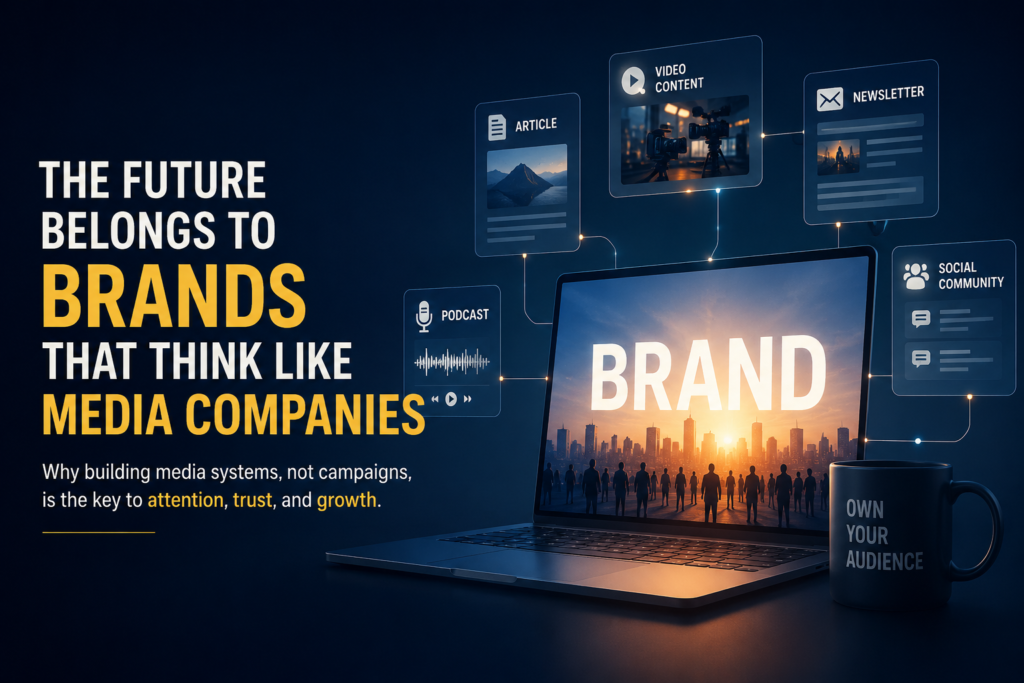
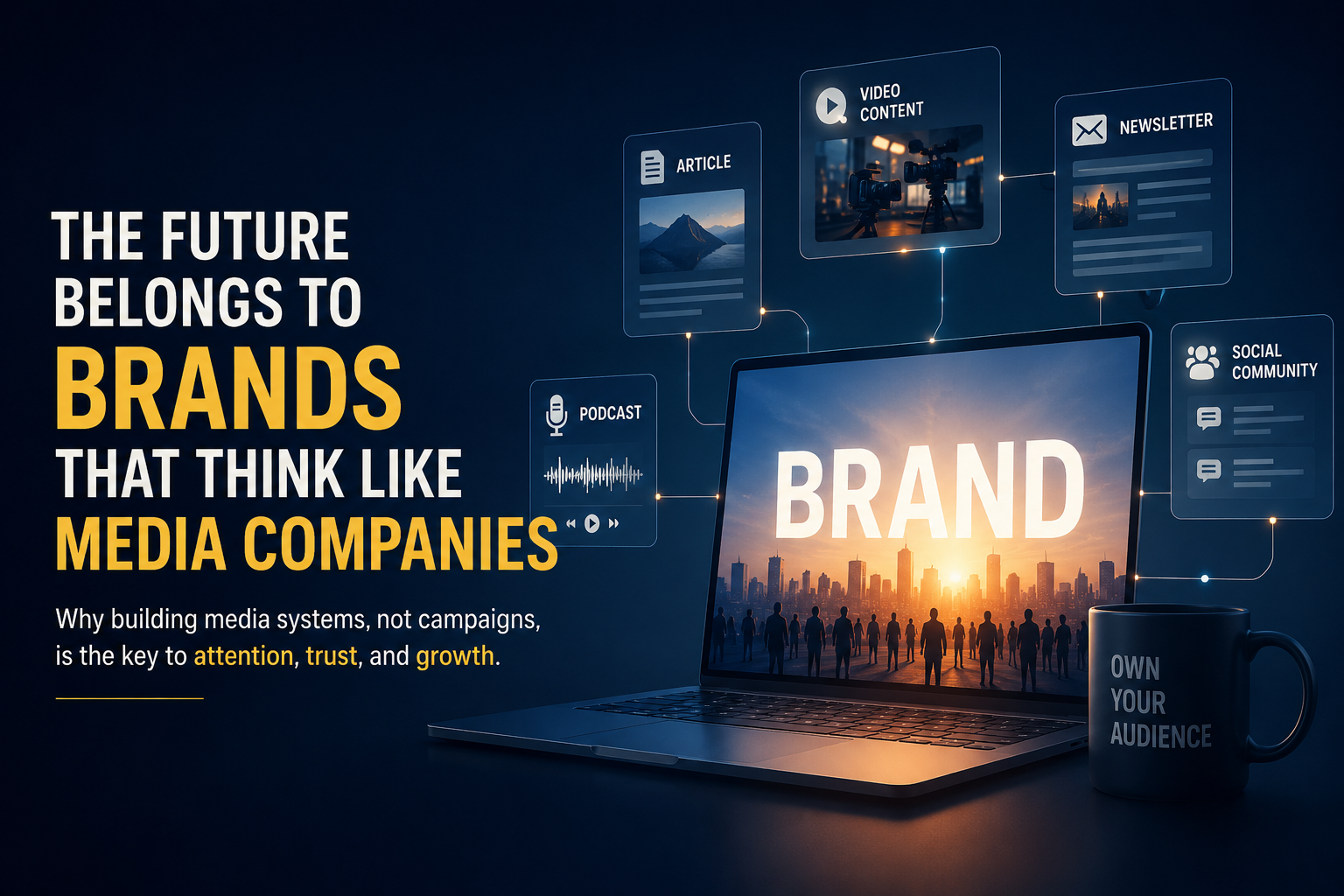
This is why the future increasingly belongs to brands that think like media companies.
Not brands that occasionally produce content.
Brands that build media systems.
Brands Are Becoming Publishers
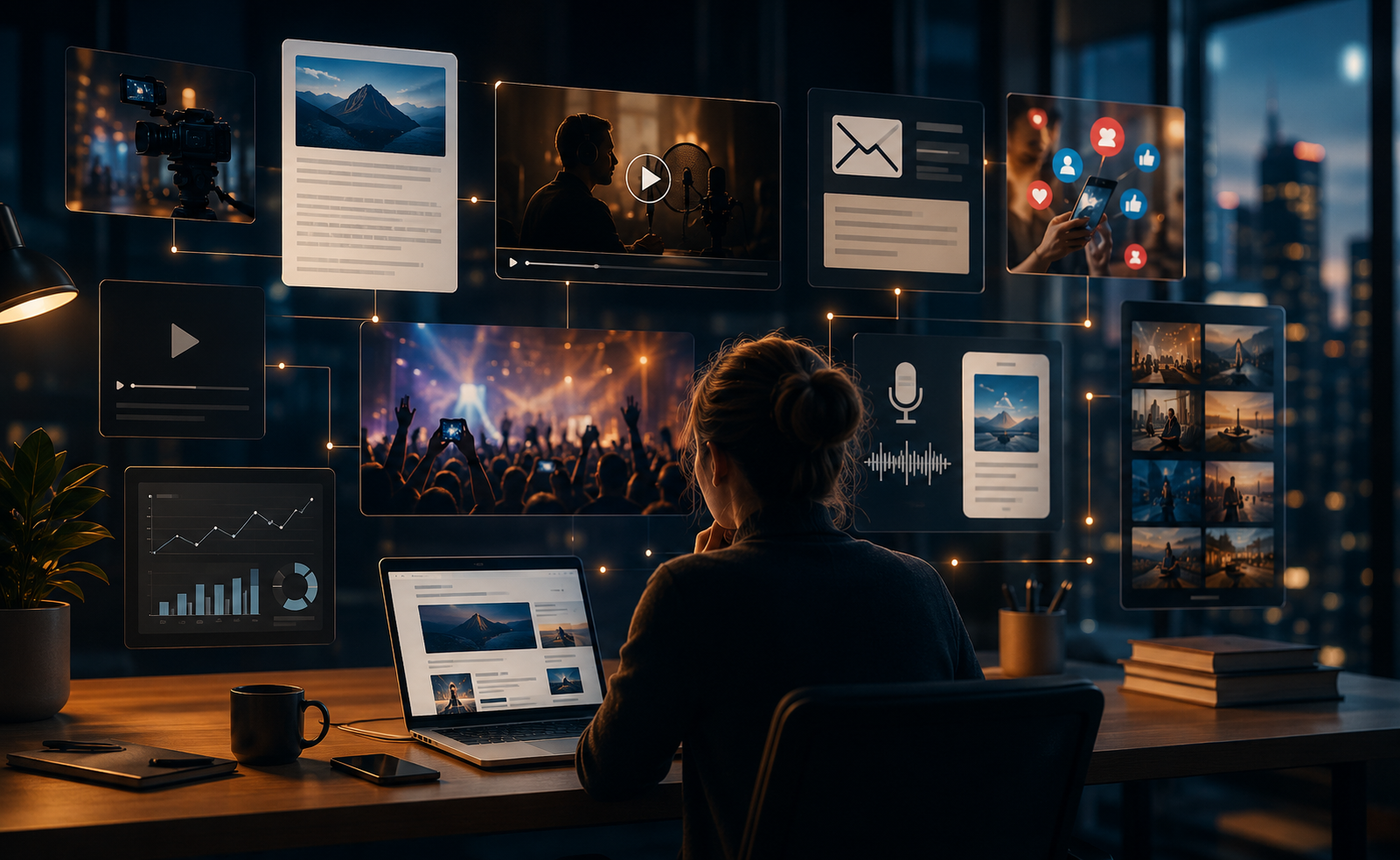
Modern brands no longer communicate only through ads.
They publish continuously.
Articles.
Videos.
Newsletters.
Podcasts.
Short-form content.
Educational content.
Opinion-driven content.
This changes the role of marketing.
The brand is no longer just promoting products.
It is creating an ongoing stream of attention.
This is what media companies have always understood:
Attention compounds when audiences return voluntarily.
Not because they are interrupted.
But because they expect value.
Brands that adopt this mindset stop thinking only in terms of campaigns.
They start thinking in terms of audience relationships.
And relationships require continuity.
Owning Attention vs Renting It
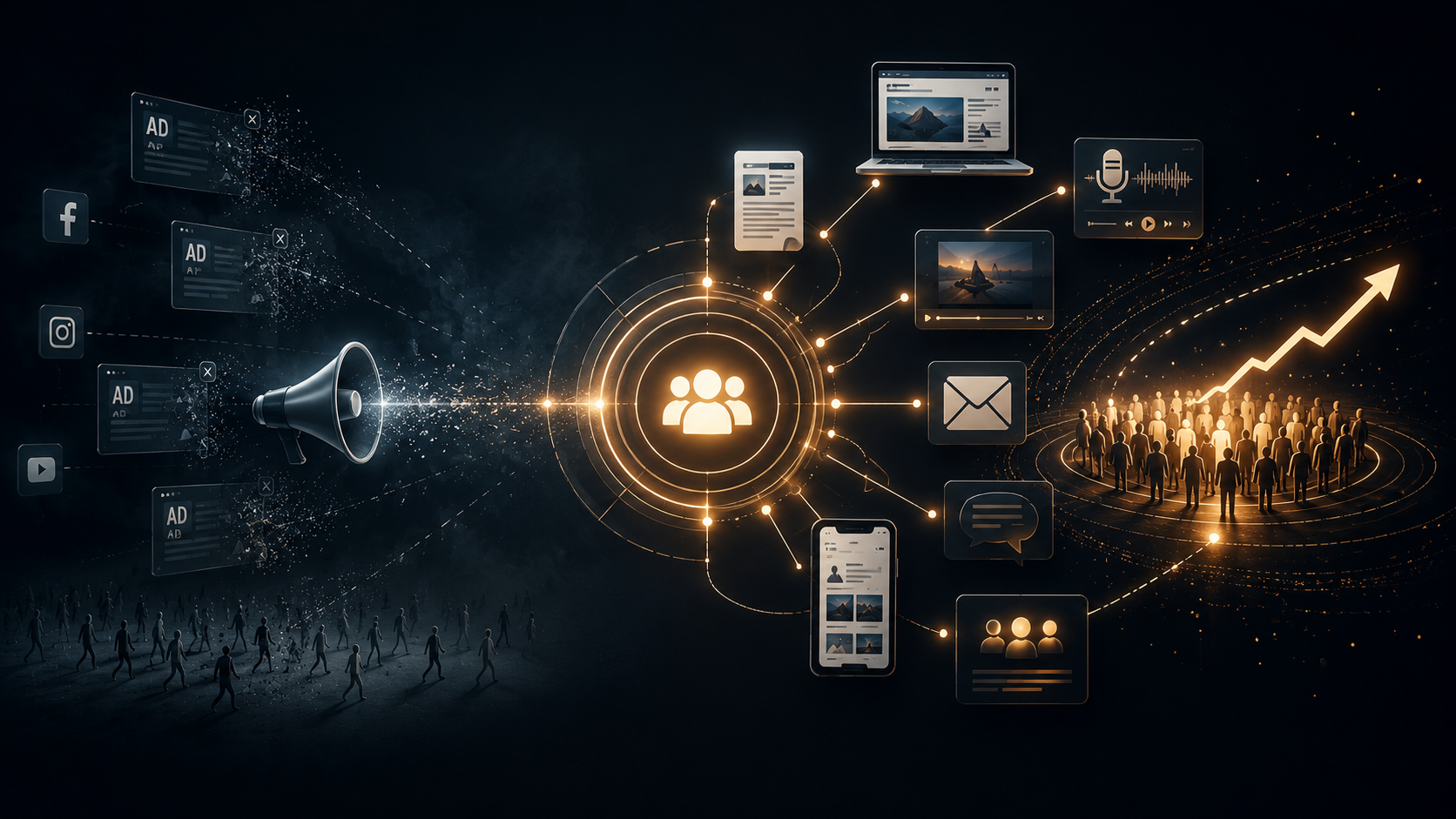
Traditional advertising rents attention.
You pay a platform.
The platform gives you visibility temporarily.
Once spending stops, distribution disappears.
This creates dependency.
The brand must keep paying to remain visible.
Owned media works differently.
When a brand builds:
An audience
A newsletter
A podcast
A loyal social following
A recognizable content ecosystem
It begins to own distribution channels.
This reduces reliance on paid acquisition.
Because attention becomes partially internalized.
The audience returns directly.
This is strategically important.
Rented attention is expensive and unstable.
Owned attention becomes an asset.
Content Ecosystems, Not Campaigns
Many brands still approach content as isolated outputs.
One post.
One video.
One campaign.
But media-first brands think in ecosystems.
Every piece of content connects to a larger structure.
Long-form content becomes short-form clips.
Insights become newsletters.
Podcasts become articles.
Articles become social discussions.
Content stops functioning as isolated marketing material.
It becomes infrastructure.
This changes the economics of marketing.
Instead of constantly restarting attention generation, the brand creates systems that continuously distribute ideas over time.
The result is compounding visibility.
Not temporary spikes.
Why Media-First Brands Win Trust
Media-first brands often build trust faster because they communicate more frequently and more naturally.
Traditional advertising usually appears during selling moments.
Media-driven communication appears continuously.
Without immediate pressure.
This matters psychologically.
When audiences repeatedly receive useful, interesting, or insightful content without being aggressively sold to, trust grows.
The relationship becomes less transactional.
The brand begins to feel familiar.
And familiarity reduces resistance.
Media-first brands also demonstrate expertise publicly.
Instead of simply claiming authority, they show how they think.
This creates credibility through exposure to process and perspective.
Trust increases because audiences observe consistency over time.
Not just polished campaigns.
The Long-Term Distribution Mindset
One of the biggest differences between campaign-driven brands and media-driven brands is time horizon.
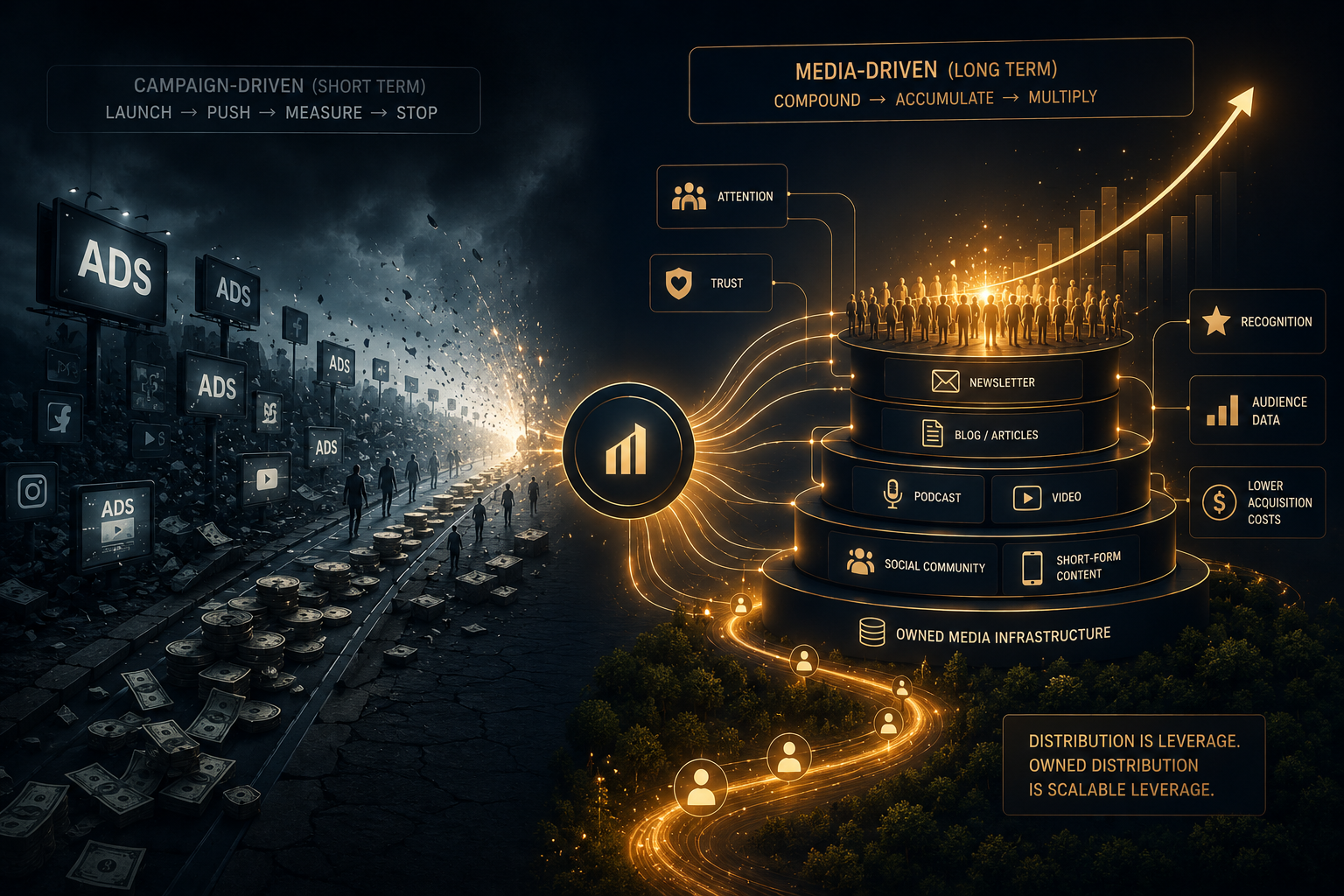
Campaign-driven brands think in bursts:
Launch → Push → Measure → Stop
Media-driven brands think in accumulation.
Every piece of content adds to distribution strength.
Every subscriber matters.
Every returning viewer matters.
Every repeated interaction matters.
This creates a compounding model.
Over time, the audience becomes easier to reach because the relationship already exists.
The brand no longer depends entirely on algorithmic luck or rising ad budgets.
Distribution becomes partially self-sustaining.
This is one of the strongest strategic advantages in modern business.
Because distribution is leverage.
And owned distribution is scalable leverage.
The Climax: Media Is Leverage
This is the deeper shift happening underneath modern marketing.
Media is no longer just communication.
It is infrastructure.
Brands with media systems gain:
Attention
Trust
Distribution
Recognition
Audience data
Lower acquisition costs
Brands without media systems remain dependent on external platforms for visibility.
And dependency reduces leverage.
This is why many companies struggle even while spending heavily on advertising.
They are renting access repeatedly instead of building long-term attention assets.
Media-first brands operate differently.
They invest in systems that continue producing visibility, trust, and audience relationships over time.
That creates strategic durability.
Because media compounds.
CTA: Start Building Your Media Engine
If the future belongs to media-first brands, then content can no longer be treated as a side activity.
It must become part of business infrastructure.
Not:
“How do we post more?”
But:
“How do we build a system that continuously earns and retains attention?”
Step 1: Think Like a Publisher
Publishers do not communicate occasionally.
They build ongoing audience habits.
This means brands should think beyond campaigns and ask:
- Why would people return to our content regularly?
- What recurring value are we creating?
- What perspective do we consistently own?
Without continuity, audiences do not form habits.
And without habits, attention disappears quickly.
Step 2: Build Owned Distribution Channels
Platforms are important.
But they are rented environments.
Algorithms can change.
Reach can decline.
Costs can increase.
This is why brands should gradually build owned channels:
Newsletters
Communities
Subscriber bases
Direct audience relationships
Owned distribution creates resilience.
Because visibility becomes less dependent on external systems.
Step 3: Build a Content Ecosystem, Not Random Content
Strong media brands do not create disconnected content.
They create interconnected systems.
One idea expands across formats.
One insight generates multiple touchpoints.
One piece of content feeds another.
This increases efficiency and reinforces recognition.
The goal is not volume alone.
It is strategic accumulation.
Step 4: Prioritize Trust Before Conversion
Media-first brands understand something important:
Trust scales better than pressure.
Not every interaction should push for immediate action.
Some interactions should educate.
Some should entertain.
Some should deepen familiarity.
This creates long-term audience value.
And long-term value compounds into stronger conversion later.
Final Perspective
The future competitive advantage is no longer just product quality, creative campaigns, or larger advertising budgets.
Those things still matter.
But they are becoming easier to replicate.
Products can be copied.
Ad formats can be copied.
Creative styles can be copied.
Audience relationships are harder to copy.
And that is exactly why media matters.
Brands that build media systems are not just creating content. They are building ongoing access to attention, trust, and distribution. Over time, this changes the economics of growth itself.
Because once an audience relationship exists:
Distribution becomes cheaper.
Trust becomes stronger.
Customer acquisition becomes more efficient.
Brand recognition compounds naturally.
The brand no longer needs to restart from zero every time it launches something new.
That is the real power of thinking like a media company.
Not visibility alone.
Continuity.
A campaign creates temporary exposure.
A media engine creates recurring attention.
And recurring attention is one of the most valuable assets a business can own in saturated markets.
This is why media-first brands often feel bigger, stronger, and more influential than competitors with similar products.
They are not just competing through advertising.
They are shaping ongoing audience behavior.
So before planning the next campaign, ask a larger strategic question:
Are we only buying short-term visibility, or are we building a system that continuously earns attention over time?
Because in the future, the brands that win will not simply be the brands with the best ads.
They will be the brands that own the strongest audience relationships.
And audience relationships are built through media, not campaigns alone.