Most brands focus on visibility.
More content.
More reach.
More impressions.
More followers.
The assumption is simple:
If people see the brand enough, the brand matters.
But visibility and importance are not the same thing.
A brand can be highly visible and still completely replaceable.
This creates one of the most uncomfortable questions in modern marketing:
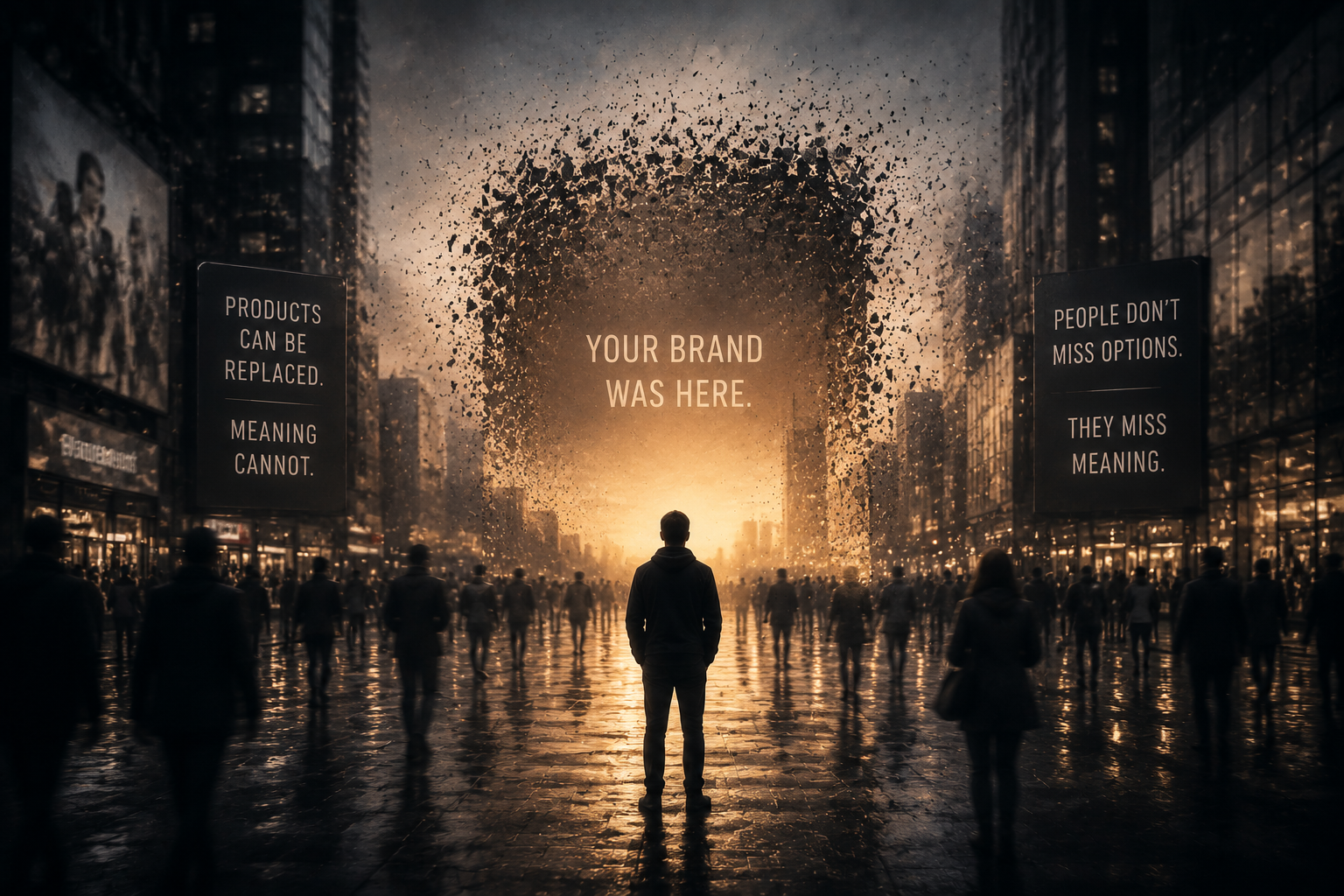
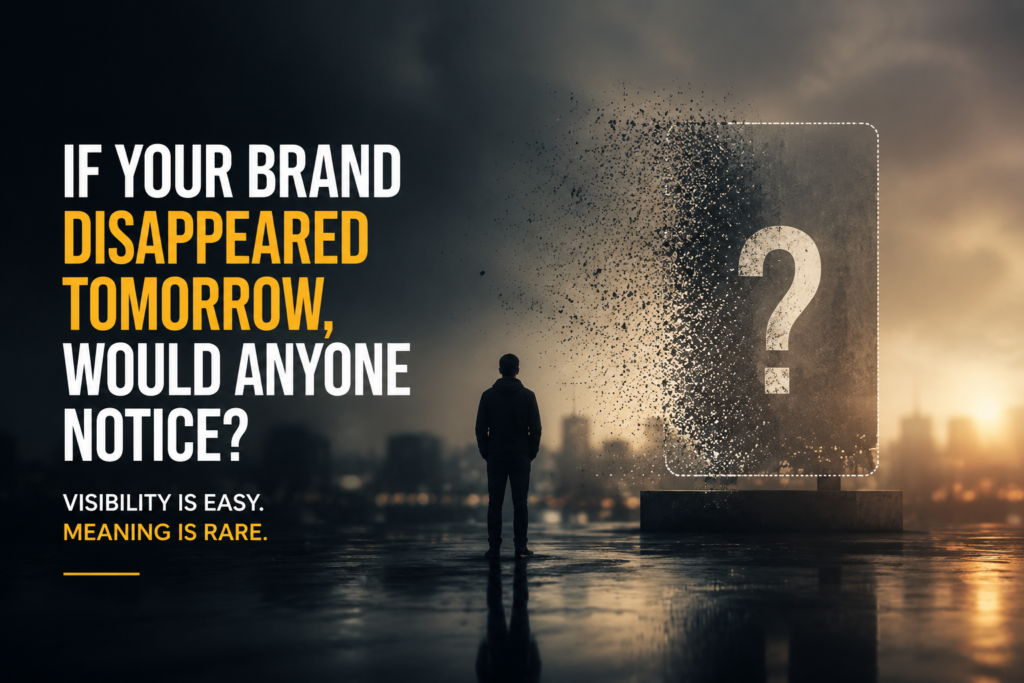
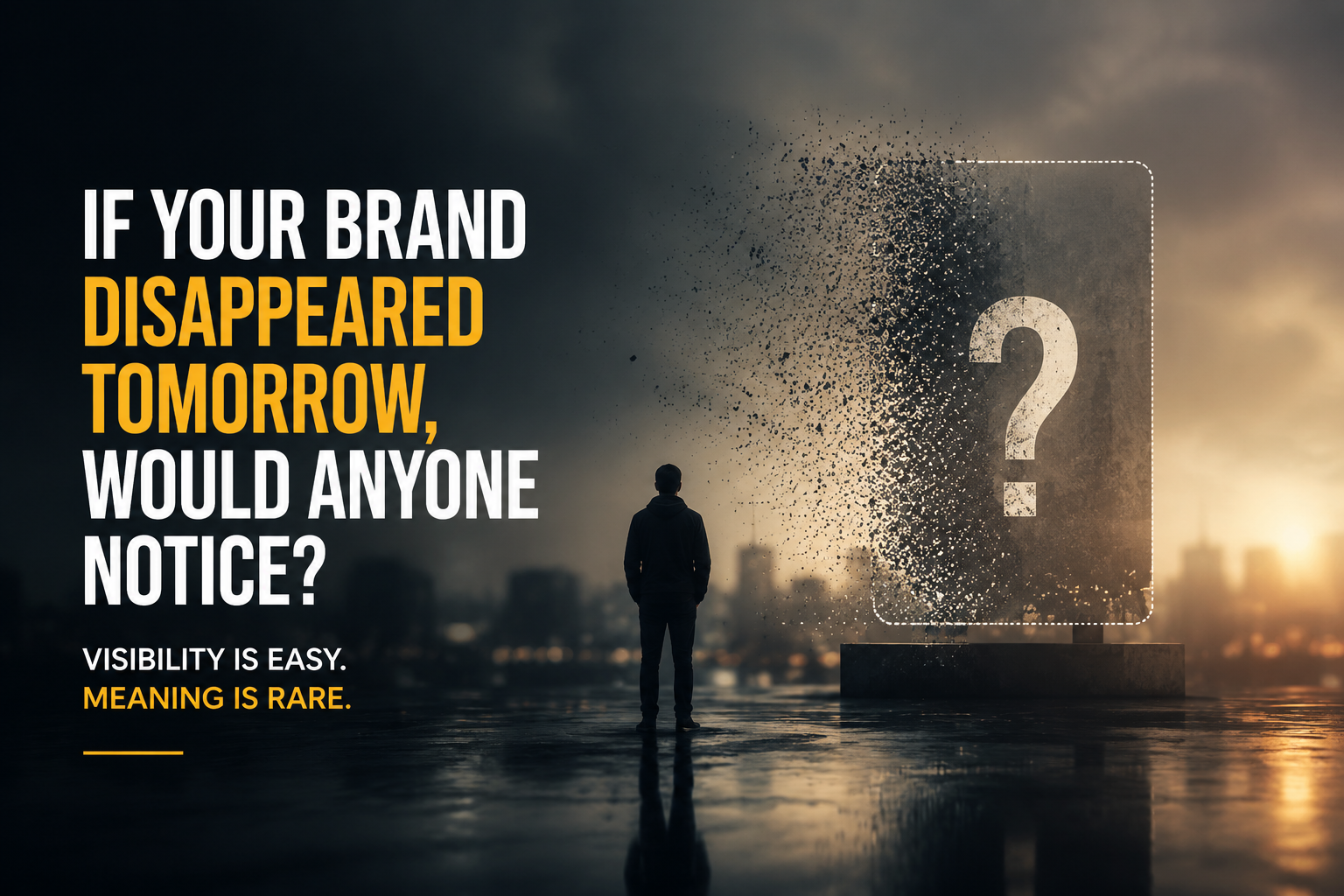
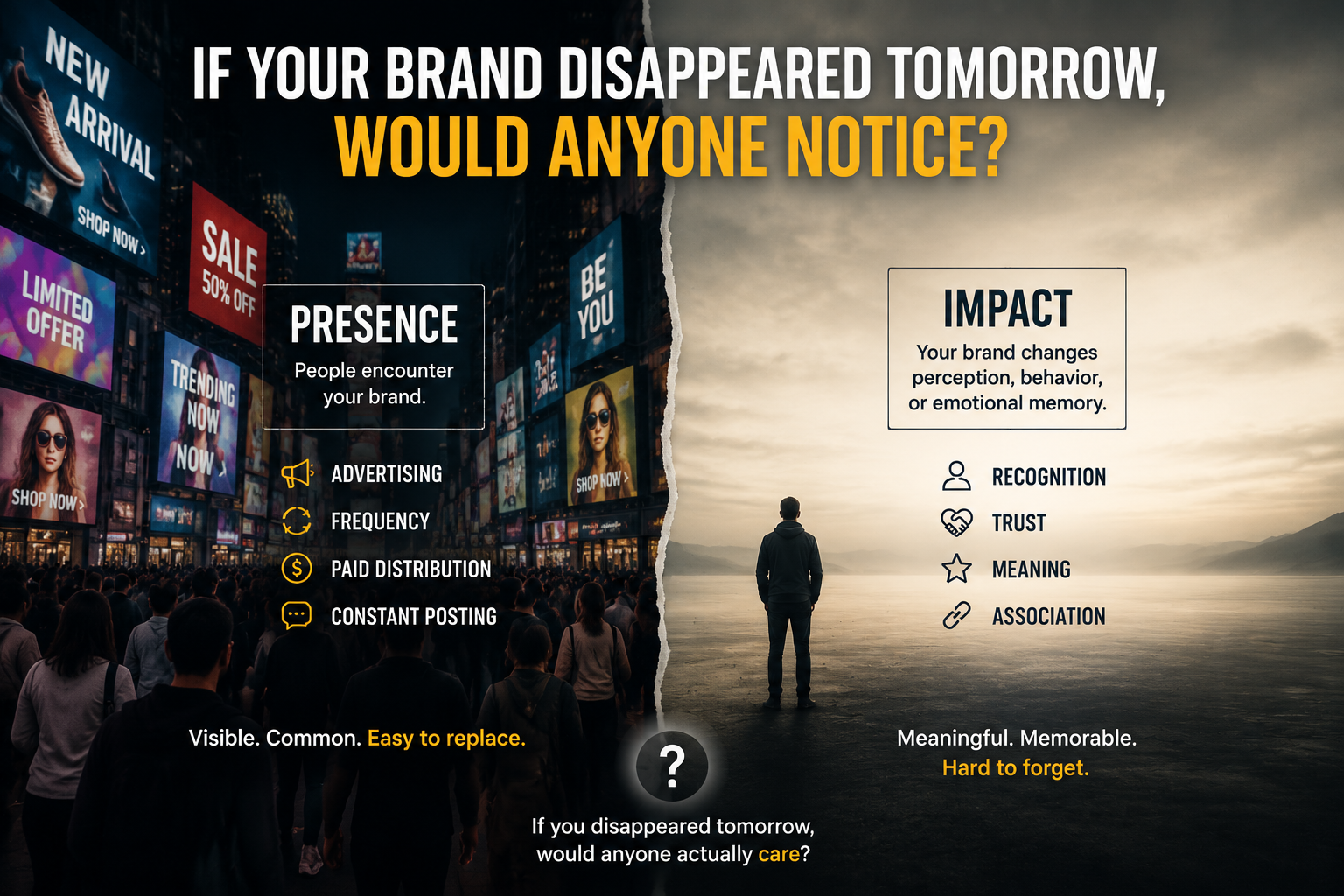
If your brand disappeared tomorrow, would anyone actually care?
Not notice temporarily.
Care.
Would customers actively miss it?
Would the audience feel its absence?
Would the market lose something meaningful?
For many brands, the honest answer is no.
And that reveals a deeper problem.
Presence does not automatically create impact.
The Difference Between Presence and Impact
Presence means people encounter your brand.
Impact means your brand changes perception, behavior, or emotional memory.
These are very different things.
Many brands achieve presence through:
Advertising
Frequency
Paid distribution
Constant posting
But impact requires something deeper.
Recognition.
Trust.
Meaning.
Association.
People may see hundreds of brands every week.
Very few leave a lasting impression.
This is why awareness alone is no longer enough.
Because awareness without emotional significance disappears quickly.
A brand becomes part of the background.
Visible.
But forgettable.
The Brand Replaceability Problem
One of the biggest hidden risks in modern business is replaceability.
If customers can switch to another brand instantly without emotional resistance, the brand has weak positioning power.
This often happens in saturated markets where products feel interchangeable.
Similar pricing.
Similar messaging.
Similar promises.
Similar aesthetics.
When differentiation weakens, substitution becomes easy.
And when substitution becomes easy, loyalty declines.
The customer relationship becomes purely transactional.
The audience no longer asks:
“Do I want this brand?”
They ask:
“Which option is most convenient right now?”
That shift is dangerous.
Because convenience-based loyalty is unstable.
The moment another option becomes cheaper, faster, or more visible, the customer leaves.
Brands that survive long-term usually create resistance to replacement.
Not through dependency.
Through emotional significance.
Emotional vs Functional Connection
Functional value matters.
The product should work.
The service should deliver.
But functionality alone rarely creates attachment.
People remember how brands make them feel.
Understood.
Inspired.
Confident.
Connected.
This is why emotional connection matters strategically.
Functional relationships are rational.
Emotional relationships are durable.
A purely functional brand competes on utility.
An emotionally connected brand competes on meaning.
And meaning is harder to replace.
This is why some brands maintain strong loyalty even when competitors offer similar products.
The product matters.
But the relationship matters more.

Signs Your Brand Is Forgettable
Forgettable brands often show similar patterns.
1. Customers remember the product, not the brand
People know what you sell.
But they do not remember who sold it.
This means recognition is weak.
2. Your messaging sounds interchangeable
If your communication could belong to any competitor, memorability declines.
Generic positioning creates generic perception.
3. Engagement disappears when spending stops
If visibility collapses immediately after ad spend ends, the audience relationship is weak.
This usually means attention was rented, not earned.
4. Customers choose primarily based on price or convenience
This indicates low emotional attachment.
The brand is functioning as an option.
Not a preference.
5. The audience feels no identity connection
Strong brands often reflect something about the customer.
Forgettable brands remain purely transactional.
Building Memorability Intentionally
Memorability is not accidental.
It is designed.
Strong brands create repeated associations over time.
Consistent tone.
Consistent perspective.
Consistent identity.
They stand for something recognizable.
This reduces cognitive friction.
The audience quickly understands:
Who the brand is
What it represents
Why it matters
Memorability also requires emotional texture.
People rarely remember neutral experiences.
They remember clarity.
Emotion.
Distinctiveness.
Unexpected perspective.
This is why memorable brands often feel more human.
Not because they are casual.
But because they communicate with recognizable identity.

The Climax: Silence After Disappearance
This is the real test of brand strength.
Not visibility.
Absence.
If the brand disappeared tomorrow:
Would customers search for alternatives immediately without hesitation?
Or would they feel that something meaningful was lost?
Many brands generate transactions.
Very few generate attachment.
And attachment is what creates resilience.
Without it, the market adapts instantly to your disappearance.
Because nothing emotionally meaningful disappears with you.
That is the danger of being merely functional.
Functional brands survive only while convenient.
Meaningful brands survive in memory.
CTA: Create Something People Would Miss
Most businesses focus on being seen.
Fewer focus on being remembered.
And even fewer focus on being missed.
But that is the real strategic goal.
Because memorability creates leverage.
And emotional significance creates durability.
Step 1: Move Beyond Pure Utility
Ask:
What emotional role does our brand play?
Not just:
What problem do we solve?
Products solve problems.
Brands create associations.
The stronger the emotional association, the harder the replacement.
Step 2: Build Distinctive Identity Signals
Memorable brands create recognizable patterns:
Tone of voice
Visual language
Perspective
Values
Behavior
Repetition of these signals builds memory.
Without repetition, recognition weakens.
Step 3: Create Emotional Consistency
Trust and attachment come from repeated emotional alignment.
Every interaction should reinforce the same feeling:
Confidence
Clarity
Belonging
Status
Simplicity
Inspiration
Consistency transforms experiences into identity.
Step 4: Build Relationships, Not Just Transactions
Transactional relationships disappear quickly.
Relational brands create ongoing connection.
This means thinking beyond conversion metrics and asking:
- Why would people return voluntarily?
- Why would they recommend us?
- Why would they defend us?
- Why would they miss us?
Those answers reveal brand strength more accurately than reach numbers.
Final Perspective
The market does not remember every brand it sees.
It remembers the brands that create meaning.
And meaning is what separates temporary visibility from lasting relevance.
A brand becomes valuable when its absence creates emotional space.
Not just operational inconvenience.
Because products can usually be replaced quickly.
Another company can offer similar features.
Similar pricing.
Similar convenience.
But emotional associations are harder to replace.
People remember brands that became part of their habits, identity, routines, or worldview. They remember brands that consistently made them feel something recognizable over time.
This is why the strongest brands are rarely built only through performance marketing.
Performance creates transactions.
Meaning creates attachment.
And attachment changes customer behavior fundamentally.
Customers become less price-sensitive.
They return more naturally.
They recommend voluntarily.
They trust more easily.
Over time, this creates a form of strategic durability that purely functional brands struggle to achieve.
Because memorability compounds.
Each interaction reinforces the previous one.
Each consistent signal strengthens recognition.
Each emotional connection deepens familiarity.
This is how brands move from being “an option” to becoming “the preferred option.”
And once a brand reaches that position, competition changes.
The customer no longer evaluates only features or price.
They evaluate emotional alignment.
That is a far more defensible position in saturated markets.
This is also why many brands disappear quietly.
Not because their products stopped working.
But because nothing meaningful would be lost if they vanished.
No emotional connection.
No distinctive identity.
No lasting memory.
Just another interchangeable presence in an overcrowded market.
So before optimizing for more visibility, more reach, or more short-term conversions, ask a deeper strategic question:
If we disappeared tomorrow, what exactly would the audience miss?
Would they miss the product?
Or would they miss the feeling, identity, trust, and meaning associated with the brand itself?
Because in the long run, the brands that survive are not only the ones people recognize.
They are the ones people emotionally notice when they are gone.