For most of business history, money was the main constraint.
If you had capital, you could buy distribution.
If you could buy distribution, you could reach people.
If you could reach people, you could grow.
This created a simple economic logic:
More budget → More reach → More customers
But that equation has quietly broken.
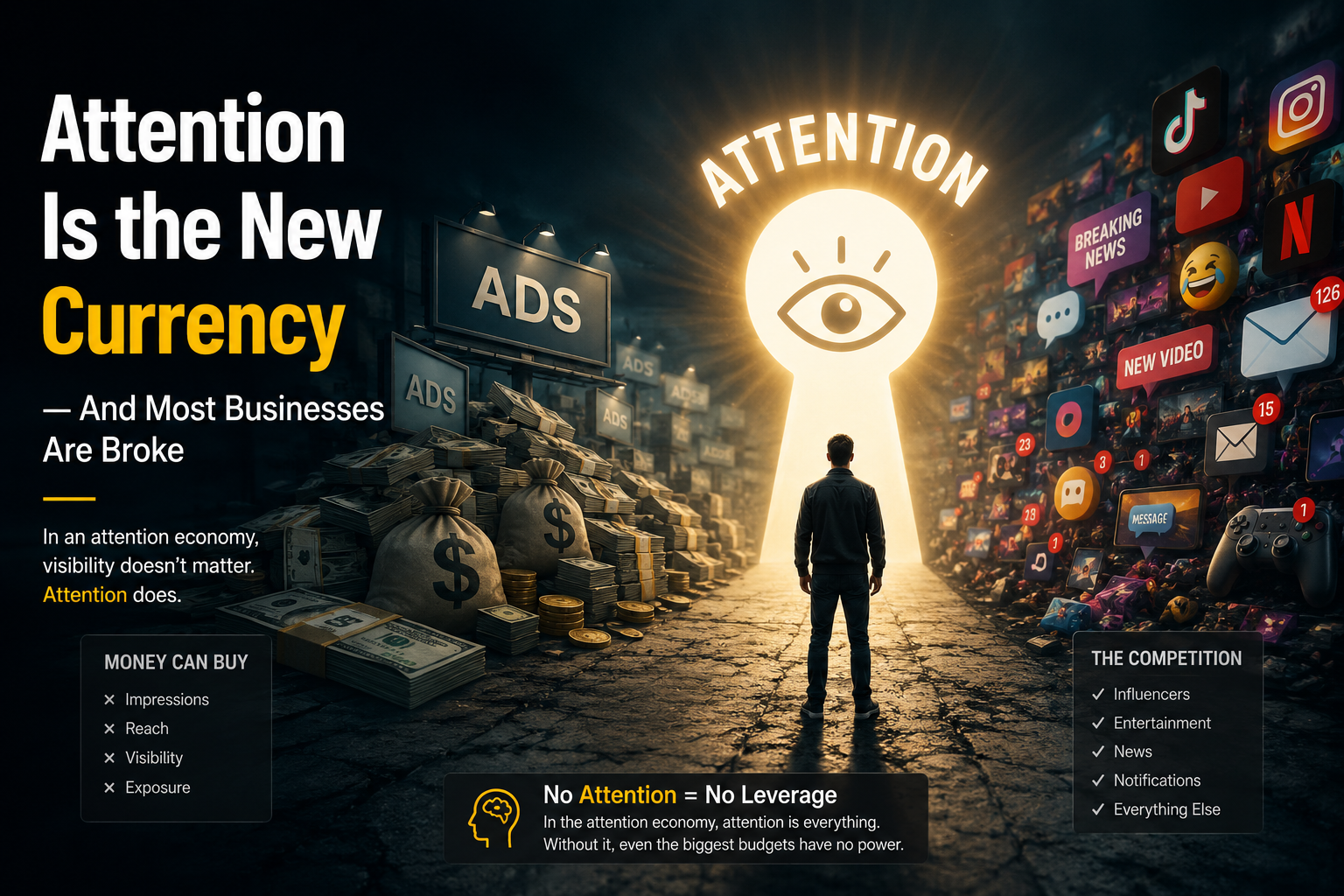
Today, money does not automatically buy attention.
And without attention, money has very little leverage.
We are now operating in an attention economy.
And most businesses are poorer than they think.
Attention as a Finite Resource
Attention is not infinite.
Time is finite.
Focus is finite.
Mental energy is finite.
Every person wakes up with a limited amount of attention they can spend in a day. And that attention must be divided between work, communication, entertainment, information, and personal life.
At the same time, the amount of content competing for that attention has exploded.
Thousands of posts.
Hundreds of videos.
Ads everywhere.
Messages everywhere.
Notifications constantly.
The supply of content is infinite.
The supply of attention is not.
That imbalance defines modern marketing.
In economics, when something is scarce and highly demanded, it becomes valuable.
Attention is now one of the scarcest resources in the digital economy.
Not money.
Not data.
Attention.
And scarcity always creates competition.
Businesses are no longer just competing with direct competitors.
They are competing with:
- Influencers
- Entertainment platforms
- News
- Memes
- Group chats
- Streaming services
- Games
- Emails
- Everything else on a screen
You are not fighting brands.
You are fighting distraction.

Why Money No Longer Buys Guaranteed Attention
There was a time when buying ads meant buying attention.
If your ad ran on TV, people saw it.
If your billboard was on a highway, people noticed it.
If your ad was in a newspaper, readers encountered it.
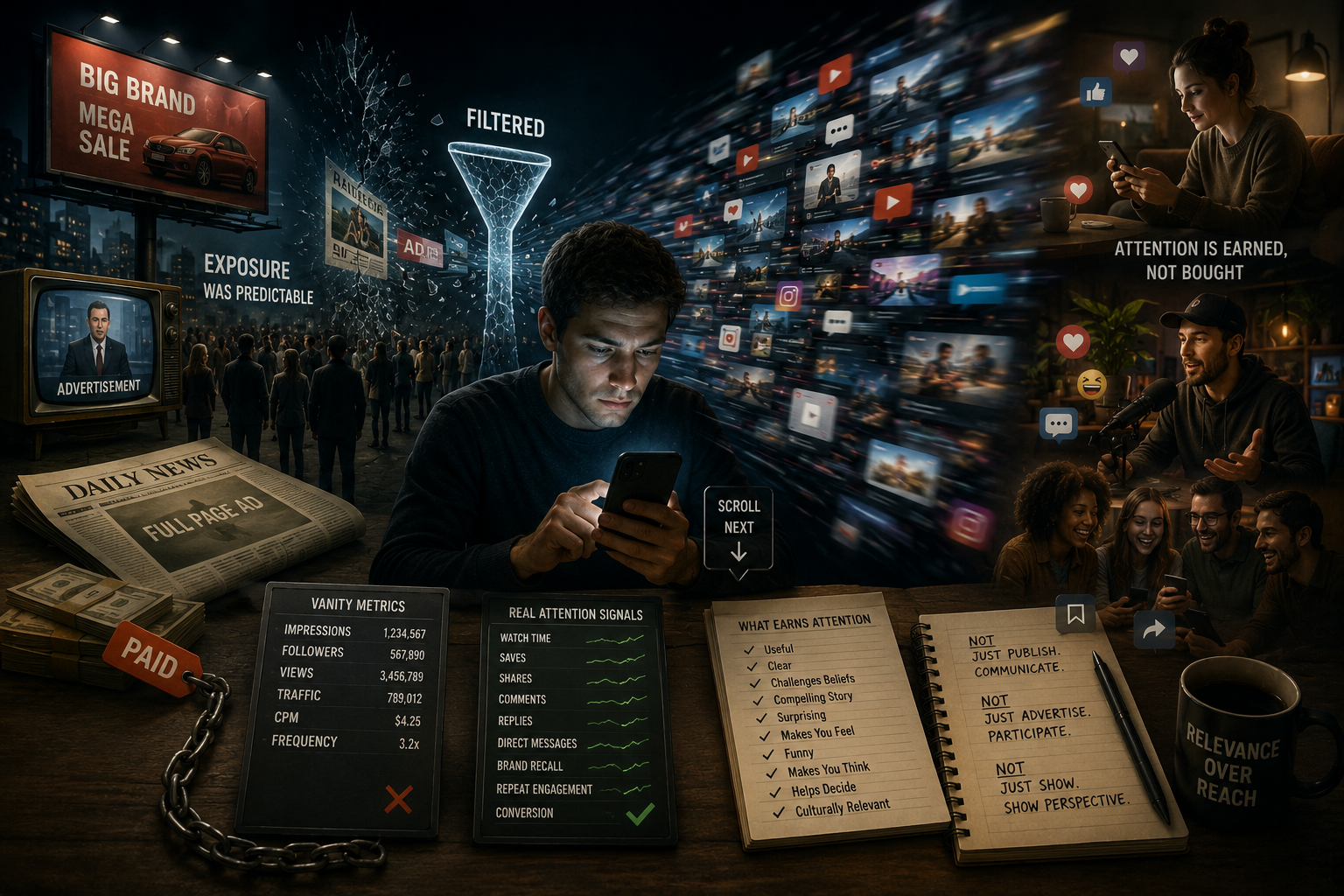
Exposure was predictable.
Now, exposure is filtered.
Digital platforms do not show content equally. They rank content based on engagement, relevance, and behavioral signals. Even paid advertising systems increasingly depend on relevance scores, engagement data, and creative performance.
You can pay for impressions.
But you cannot guarantee attention.
An ad can appear on a screen and still be ignored.
A video can start playing and still not be watched.
A post can be shown and still not be noticed.
Visibility is not attention.
And many businesses confuse the two.
This is one of the biggest strategic misunderstandings in modern marketing:
Reach is not attention.
Impressions are not attention.
Views are often not even attention.
Attention means someone stopped.
Looked.
Thought.
Reacted.
Remembered.
Everything else is just exposure.
Scroll Culture and Micro-Attention
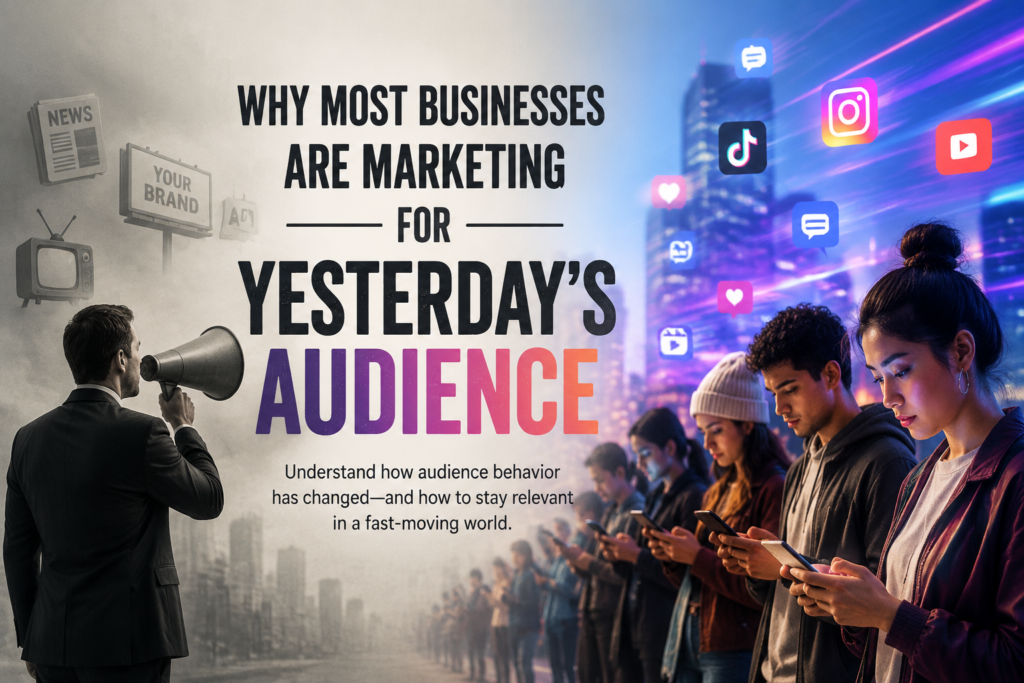
Modern platforms have trained people to scroll continuously.
This created what we can call micro-attention.
People do not sit and evaluate content slowly anymore.
They scan.
They swipe.
They skim.
They decide instantly.
You are not competing for minutes.
You are competing for seconds.
Sometimes less.
This changes how marketing works at a fundamental level.
In the past, a message could be long, gradual, and explanatory.
Today, if you do not capture interest immediately, the interaction ends before it begins.
Attention now has layers:
First, you must stop the scroll.
Then, you must hold attention for a few seconds.
Then, you must create interest.
Then, maybe, you earn deeper engagement.
Most content fails at the first step.
It never stops the scroll.
This is why attention is expensive now, even when media costs are low.
Because the real cost is not media.
The real cost is relevance.
Businesses Mistaking Reach for Attention
Many businesses still measure success using reach-based metrics:
Impressions
Followers
Views
Traffic
CPM
Frequency
These metrics look impressive on reports.
But they often do not reflect real attention.
A million impressions does not mean a million people cared.
Ten thousand views does not mean ten thousand people paid attention.
A large follower count does not mean influence.
Businesses often optimize for visibility numbers because they are easy to measure.
But attention is harder to measure.
It shows up in different signals:
- Watch time
- Saves
- Shares
- Comments
- Replies
- Direct messages
- Brand recall
- Repeat engagement
- Conversion without heavy discounting
Attention creates memory.
Memory creates preference.
Preference creates leverage.
Reach without attention creates nothing.
It is possible to be highly visible and completely irrelevant at the same time.
And many brands are.
What Actually Earns Attention Today
Attention today is not earned through volume alone.
It is earned through relevance, emotion, insight, or utility.
Content earns attention when it does at least one of the following:
- Teaches something useful
- Explains something clearly
- Challenges a common belief
- Tells a compelling story
- Shows something surprising
- Makes people feel understood
- Makes people laugh
- Makes people think
- Helps people make a decision
- Reflects something culturally relevant
Attention is a reaction to value.
Not to presence.
This is why some small creators outperform large companies in engagement. Not because they have bigger budgets, but because they understand how to create content that people actually want to consume.
They do not just publish.
They communicate.
They do not just show products.
They show perspective.
They do not just advertise.
They participate in conversations.
Modern attention is earned socially, not bought mechanically.
The Climax: No Attention = No Leverage
This is the most important strategic point.
Attention creates leverage.
If people pay attention to your brand, you gain:
Trust
Influence
Pricing power
Word of mouth
Organic reach
Customer loyalty
Brand memory
If people do not pay attention, you lose leverage.
Then the only way to grow is through:
Discounts
Paid ads
Promotions
Price competition
Constant spending
Without attention, marketing becomes expensive.
With attention, marketing becomes efficient.
This is why attention is not just a marketing metric.
It is a business asset.
Companies with attention can launch products faster.
They can charge more.
They can recover from mistakes faster.
They can grow with lower acquisition costs.
Companies without attention must constantly buy growth.
And buying growth forever is very expensive.
That is why many businesses look profitable on the surface but are structurally weak. They do not own attention. They rent exposure.
And rented growth disappears when spending stops.
Owned attention compounds.
CTA: Invest in Attention, Not Ads Alone
Advertising is not useless.
But advertising without attention strategy is inefficient.
Businesses should not only ask:
How do we run more ads?
They should ask:
How do we become interesting enough to earn attention repeatedly?
That means investing in:
Content
Brand voice
Storytelling
Education
Community
Consistency of perspective
Original thinking
Platform-native content
Audience understanding
The goal is not just to reach people.
The goal is to be remembered.
Because in today’s economy:
Money buys exposure.
Attention creates leverage.
Leverage creates growth.
And the businesses that understand this early will not just be visible.
They will be valuable.